
Quick Answer
Every year, a predictable pattern plays out among Miami businesses: the ones that planned their Q4 marketing in September and October close the year strong, while the ones that started thinking about it in November spend the holiday season reacting instead of capitalizing.
Get Ahead of Holiday Demand: Why Miami Businesses Need Their Q4 Marketing in Place Now
Every year, a predictable pattern plays out among Miami businesses: the ones that planned their Q4 marketing in September and October close the year strong, while the ones that started thinking about it in November spend the holiday season reacting instead of capitalizing.
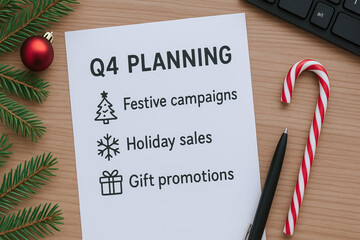
Every year, a predictable pattern plays out among Miami businesses: the ones that planned their Q4 marketing in September and October close the year strong, while the ones that started thinking about it in November spend the holiday season reacting instead of capitalizing. The difference is not budget. It is timing. In a market as competitive and seasonally driven as Miami, the window to build the visibility, the content, and the campaign infrastructure that produces Q4 results is now, not when the season is already underway.
Miami’s Q4 Is Different From Most U.S. Markets
The Q4 marketing dynamic in Miami is amplified by factors that do not apply in the same way to most other cities. Snowbird season begins in October, which brings a significant influx of higher-income seasonal residents who are establishing new local service relationships: new doctors, new restaurants, new personal services, new home vendors. Tourism spikes across the same period as the weather becomes the national selling point for South Florida. Local businesses across every category, from hospitality and retail to professional services and home improvement, are competing for a larger and more active consumer base during this window than at any other point in the year.
That increased demand also brings increased competition. National brands run holiday campaigns with resources that local businesses cannot match in volume. The answer is not to spend more; it is to be positioned better. A local Miami business that has built genuine search visibility, a strong Google Business Profile, and seasonal content that matches what Q4 consumers are actually searching for will outperform a national competitor running generic holiday advertising in the local results that matter most. Our local SEO services are built specifically for this kind of market-specific competitive advantage.
Seasonal Content Has a Lead Time That Most Businesses Underestimate
One of the most common and costly Q4 mistakes Miami businesses make is treating seasonal content as something to produce in November when the holiday season is already obvious. SEO content does not rank the week it is published. Google indexes pages over days and weeks, evaluates signals over a longer period, and assigns rankings based on accumulated authority and relevance. A holiday landing page published in October has a meaningful chance of ranking for seasonal search terms by mid-November. The same page published in late November is competing for rankings it will not achieve until after the holiday window has closed.
Seasonal content at J.B. Converse produced in September and October for the holiday fishing and family outing season performs better than content produced in December for the same terms. The principle is the same for Miami businesses in every category. Our content team plans and produces Q4 seasonal content now, including holiday service pages, gift guides, and blog content targeting seasonal search intent, so that it is indexed and ranking when traffic peaks rather than indexing during the decline.
Site Speed and Conversion Paths Are Q4 Emergencies When Left Until November

Holiday traffic sent to a slow or poorly converting website is the most expensive kind of marketing failure, because it is visible in the data but the damage is done. A business that drives paid traffic to a page with a four-second mobile load time, a buried phone number, and a contact form that requires five fields to schedule a simple appointment is paying for clicks that do not become customers. These are not complex problems to fix, but they take time to address properly, and the time to address them is before the traffic arrives, not during it.
Our web team audits and corrects conversion friction as part of Q4 preparation: mobile load speed, click-to-call accessibility, form length and placement, and the clarity of the primary call to action above the fold. Each of these fixes produces a measurable improvement in the percentage of holiday visitors who become leads.
Paid Advertising Costs Rise in Q4: Structure Matters More Than Budget
Cost per click on Google and Meta increases significantly in Q4 as more advertisers compete for the same holiday search and social inventory. A business that enters the holiday season with a well-structured paid campaign, strong landing page alignment, and a retargeting sequence for visitors who did not convert on the first visit will consistently outperform a business spending more on a broader, less focused campaign. The structure of the campaign determines the return, not just the budget level.
Our paid advertising programs are built around conversion from the start: tightly matched ad copy and landing pages, specific audience targeting for Miami’s distinct demographic segments, and retargeting campaigns that keep your business visible to the holiday-intent visitors who need more than one touchpoint before they contact you. Combined with our AI marketing tools, we produce more ad variations, more landing page copy, and more campaign iterations during the Q4 window than traditional processes allow. Call us at 321.255.0900 or visit our contact page to start the Q4 conversation before the window to prepare has closed.
Key Takeaways
- MarketsThe Q4 marketing dynamic in Miami is amplified by factors that do not apply in the same way to most other cities.
- Snowbird season begins in October, which brings a significant influx of higher-income seasonal residents who are establishing new local service relationships: new doctors, new restaurants, new personal services, new home vendors.
- Tourism spikes across the same period as the weather becomes the national selling point for South Florida.
- National brands run holiday campaigns with resources that local businesses cannot match in volume.
- The answer is not to spend more; it is to be positioned better.